
Table of Contents
Mine sites are high-risk environments where the margin for error is extremely slim. When light vehicles, heavy mobile equipment and autonomous fleets share the same operating areas, a clear access strategy is crucial. A dependable light vehicle (LV) boom gate trailer or skid solution can help create controlled points of entry and crossing on mine sites which supports safer interactions and smoother flow across critical zones.
Traffic control matters more as site autonomy grows
On a working mine site, those interfaces show up everywhere:
- Haul road crossings where visibility is limited
- Wash bays and weighbridges where queues form quickly
- Workshops and laydown areas where light vehicles mix with heavy equipment
- Temporary closures for blasting, incidents, or maintenance
In many cases that we see, sites don’t need a permanent civil build to improve control; they need a solution that can be deployed fast, moved when the mine layout changes and relied upon in harsh conditions.
The ASARCO challenge: creating control points from scratch
ASARCO required boom gate capability to enhance traffic control and support the safe operation of autonomous vehicles. With no established traffic control system in place, the site required dependable control points to reduce risk and develop consistent procedures for drivers and operators.
Environmental conditions were also a factor. In arid, high-exposure locations, equipment used must be built to a high standard to maintain performance over time. For most sites, there is no room for extended downtime, so the practical question becomes: how do you deploy access control without locking the infrastructure in one place?
What is an LV boom gate trailer?
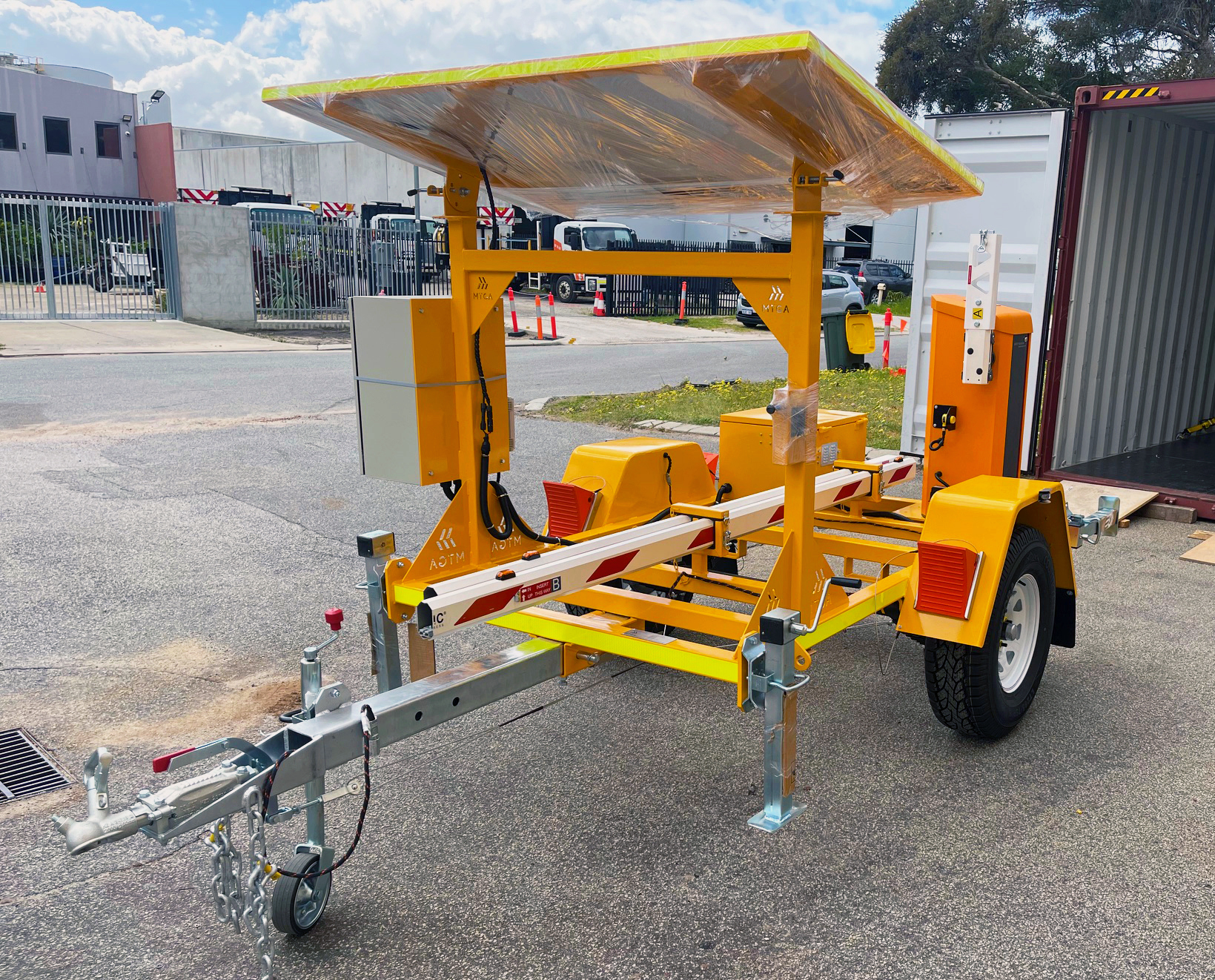
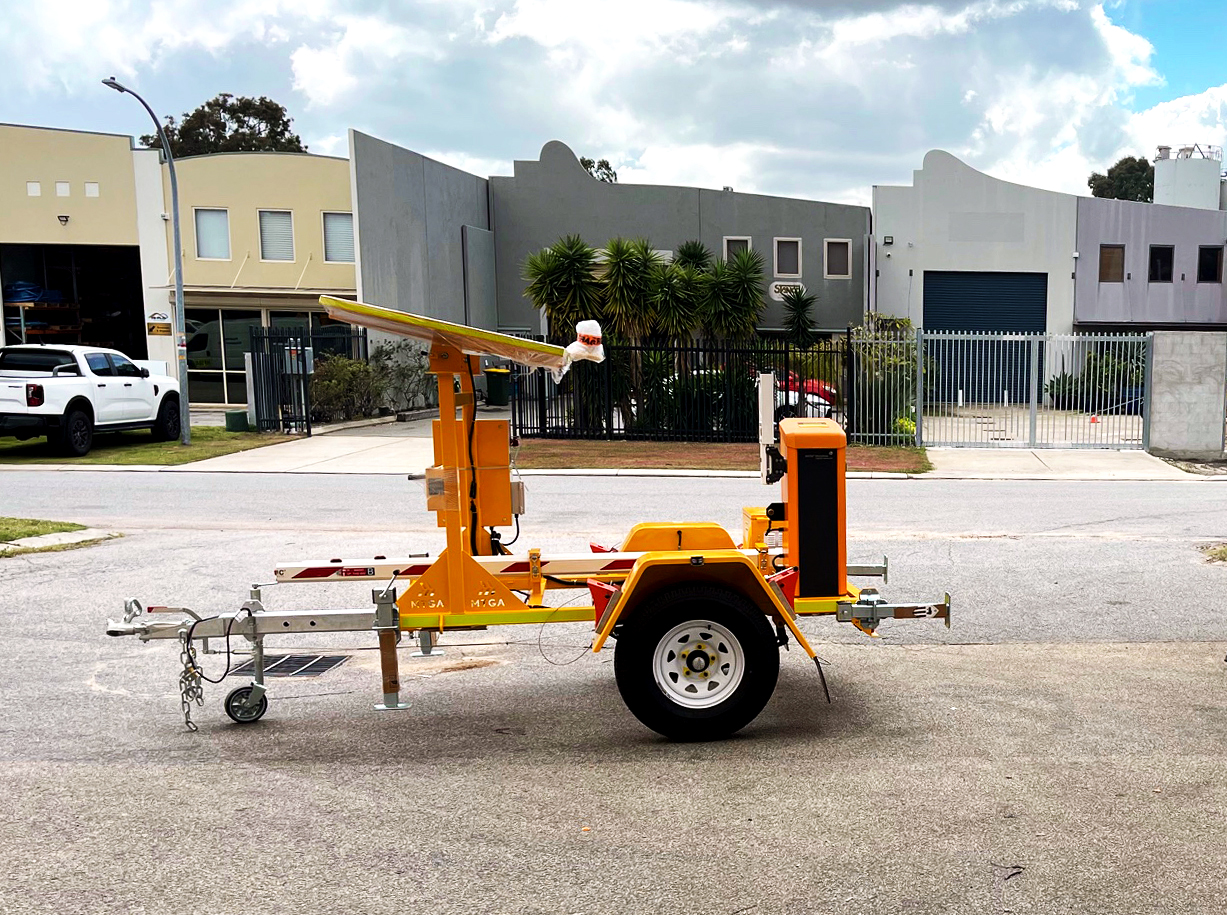
A light vehicle (LV) boom gate trailer or skid is a relocatable access control unit built on a portable trailer, designed to be positioned where needed and redeployed as conditions or site needs change. It enables a mine site to introduce controlled entry and crossing points without requiring a fixed or permanent installation.
Typical use cases include:
- Controlling entry to a restricted road or operational zone
- Managing alternating traffic flow through narrow sections
- Regulating queues at high-traffic facilities
- Isolating an area quickly during emergency response
When combined with remote control capability, an LV boom gate can also help reduce exposure by enabling control from a safer location, depending on site and safety procedures.
Why relocatable trailers outperform fixed gates in many mine scenarios
Fixed boom gates can make sense for permanent infrastructure, but mines rarely stay static. Haul roads move, access routes shift and expansion plans frequently alter the map; this is where a trailer-based approaches delivers operators value.
Key advantages of a trailer approach include:
- Flexibility to relocate as the mine progresses
- Faster deployment without major civil works
- The ability to trial and optimise traffic plans before committing to permanent builds
- Consistent controls across multiple locations using the same equipment and procedures
For ASARCO, the ability to deploy the boom gates as a trailer rather than a fixed skid made it easier to relocate as the site evolved.
Building for harsh conditions and day-to-day reliability
Mine site access control equipment must withstand vibration, dust, UV exposure and constant handling. Beyond the mechanical build, reliability is also about repeatability: a control point should function the same way, every time, regardless of who is on shift.
When assessing a Light Vehicle boom gate trailer solution, focus on:
- Durability and corrosion resistance are suitable for the environment
- Stability and safe set-up for uneven terrain
- Visibility and clear signalling to drivers
- Maintainability and serviceability, including standard parts and straightforward inspections
- Operational simplicity so training is consistent across teams
A well-designed LV boom gate trailer becomes part of your standard operating rhythm, not a special case that only a few people understand.
Deployment tips for getting the most from boom gate control
To support both safety and throughput, we consider the control point as a system, not just a piece of equipment. The steps we’ve outlined below can help increase effectiveness when you are deploying an LV boom gate trailer:
- Map the highest-risk vehicle interaction points first, then prioritise deployment
- Define clear right-of-way rules and signage for each controlled location
- Train operators on consistent procedures, including escalation and emergency isolation
- Review placement regularly as road conditions and traffic volumes change
- Integrate the gate use into site documentation and pre-start routines
If your operation utilises layered controls for vehicle interaction, boom gates can be integrated alongside signage, separation strategies and collision avoidance technology as part of a comprehensive approach.
Scalable traffic control that can grow with the site
For ASARCO, the initial deployment included 12 remotely controlled units. Each LV boom gate trailer supported repeatable control at key points, providing a consistent approach to traffic control where it was needed most. The result was a system that enhances the safe interaction between light vehicles and heavy vehicles at controlled access points and crossings, reducing collision risk and increasing site safety.
Just as importantly, the solution is scalable. As operations grow and the site layout shifts, a trailer-based boom gate can expand without requiring a redesign of fixed infrastructure.
Product information and case study
If you are looking for a relocatable access control solution designed for mine site conditions, explore MTGA’s LV boom gate trailer product page and consider how an LV boom gate trailer could fit within your broader traffic management plan.
You can also download the ASARCO case study for a closer look at the deployment approach and the outcomes achieved on site.
If you would like help determining the right solution for your operation, contact the MTGA team, who can assist in developing a vehicular control tailored to meet your site’s specific needs.

